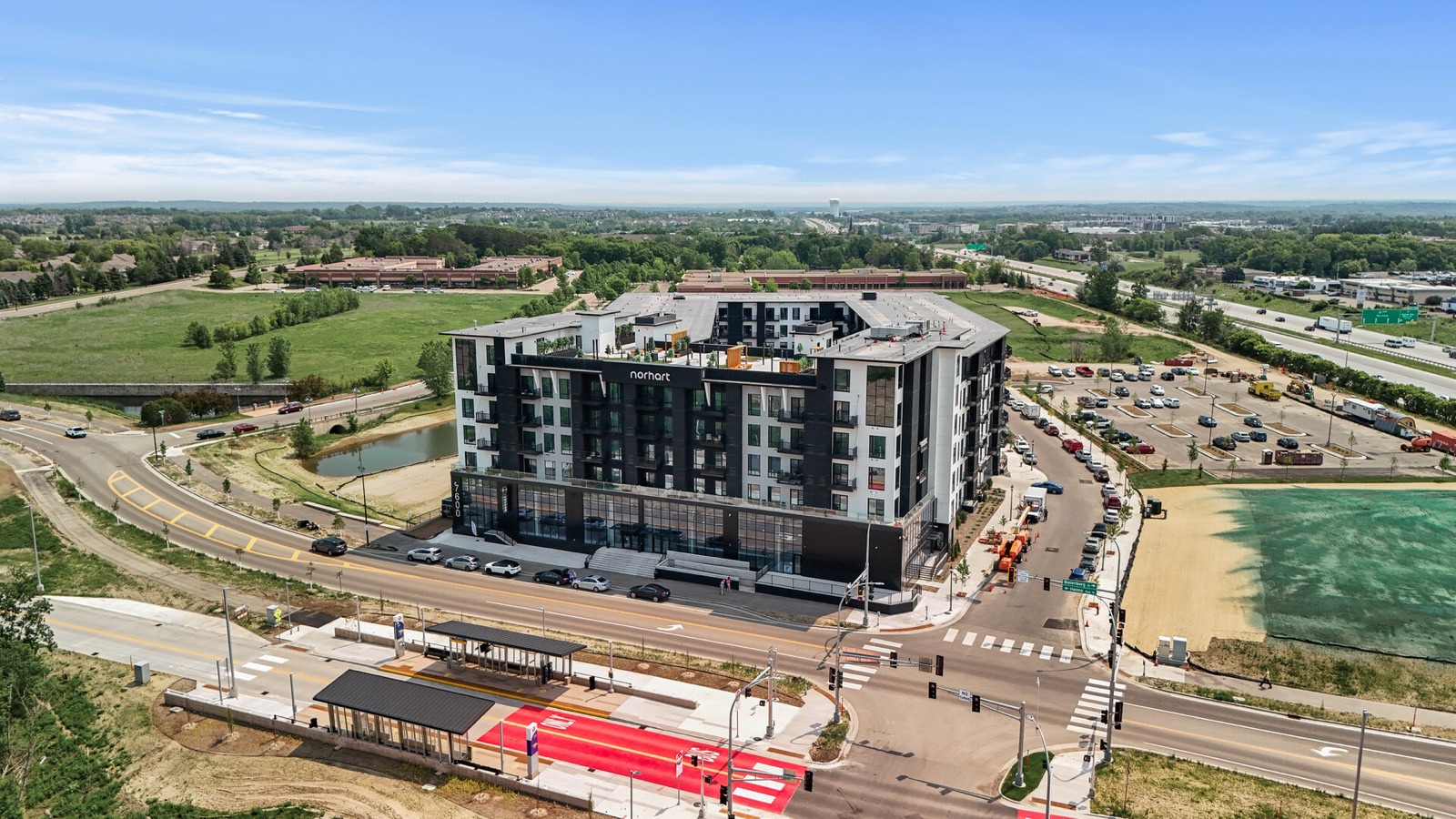
Norhart: one AI brain runs a 400-apartment business
Norhart runs about 400 apartments in Forest Lake, Minnesota. It’s also our own company. Zuy’s founder, Mike Kaeding, runs it, and it’s where every Zuy system gets built and proven before we offer it to anyone else.
The problem: eight tools that couldn’t see each other
Running apartments means leasing, resident requests, maintenance, building systems and accounting, all at the same time. At Norhart, each of those lived in its own software: property management, a leasing CRM, rent pricing, resident payments and utility billing, accounting, expense reports, the phone system, and the building systems that run door access, phone entry and in-unit internet.
None of them talked to each other, so people did the connecting. A lead got re-typed from one system into another. Someone checked the maintenance tool before answering a resident. The books got reconciled by hand at the end of the month. When something slipped between two tools, a resident felt it.
And the bill went up every year: per-seat pricing, seats nobody used and renewals that came back higher. All together, the software cost about $111,000 a year.
What we built
We didn’t replace everything at once. We started at the edges, with the phones and email. Next came the leasing CRM, then the building systems. The core, our property management software, comes out last. That order was on purpose: the fewer connections a tool had to everything else, the easier it was to swap out. Each early switch was low-risk, and by the time we reached the core, everything around it already lived in one system. Today one system handles leasing, residents, maintenance, building systems and the books, and it sees all of it at once.
Every message in one place, with a reply drafted
Calls, texts, emails and messages all land in one place. The AI drafts each reply from our policies and the resident’s full history. Here’s the kind of exchange it handles every day:
Is parking included with the apartments?
Hi Chris, every apartment includes parking, and heated garage stalls are available too. Would you like to rent one?
Example of a typical exchange.
Honestly, the replies surprised us. They were shockingly good, and they don’t just answer the question. They move the conversation forward.
Our team still gives replies a final look, and every edit teaches the AI something. It’s close to answering on its own.
Policy keeps it on track. We built a policy system that spells out our rules, so the AI drafts replies the way our policies say, not the way it guesses. Before it runs on its own, it will also be limited to what the person it’s helping is allowed to know: a resident will be able to ask about their own lease, but never about another resident’s.
Staff ask the business anything
Instead of pulling reports from several systems, staff ask in plain English: “Which renewals next month have open work orders?” They get one answer from across the whole business, limited to what each person is allowed to see.
It learned from everything we had
We gave it our raw history: years of emails, conversations and financial records. From that it learned how the business really works: the answers we give, the exceptions we make and how we talk to residents.
It found new revenue on its own
By mining data that was already sitting in our systems, it found where we were leaving money on the table. Some of it was simple, like catching billing mistakes. From there we built bigger systems on years of our own pricing and lease history: revenue management to set rents, and lease expiration management, which keeps too many leases from ending in the same month. Next are new services for residents, like a monthly deposit waiver fee instead of a security deposit for residents who want one.
Building systems, connected
Door access, phone entry and security cameras are part of the same brain, so staff can ask what happened at a building as easily as they ask about a lease. We call that part GroundWatch. Read the GroundWatch case study.
Results
- More than $100,000 a year of software being replaced by one system we own.
- About 25% fewer staff hours.
- Every call, text and email in one place, with a reply drafted from our policies and the resident’s history.
- One brain sees everything, so requests stop falling through the cracks between tools.
- New revenue from catching billing mistakes, with smarter pricing and new resident services building on it.
What we learned
Start at the edges. Swap out the tools with the fewest connections first. They’re the easiest to replace, each one pays off on its own, and the core is much easier to move once everything around it is already connected.
Let it draft before it acts. Starting with drafts let the AI learn our real answers, and let us see how good it is. It’s close to answering on its own.
Give it your real history. The system became truly useful once it could learn from our actual emails, conversations and books, not a cleaned-up summary of how we think we work.
Connect as you go. Each new part was easier than the last, because it plugged into a system that already knew our residents, our units and our history.
Want this for your business?
Tell us the one problem that costs you the most time or money. We’ll build real, working software that solves it, free, and let you try it on your own work.
Get your free solution